
Subterranean Sanctuaries

Jesse Smets
Fossils trace the origins of these subterranean dwellings back to the age of dinosaurs, with creatures carving out their own spaces some 260 million years ago. This ancient practice of burrowing has been a survival strategy adopted by numerous species throughout the millennia.
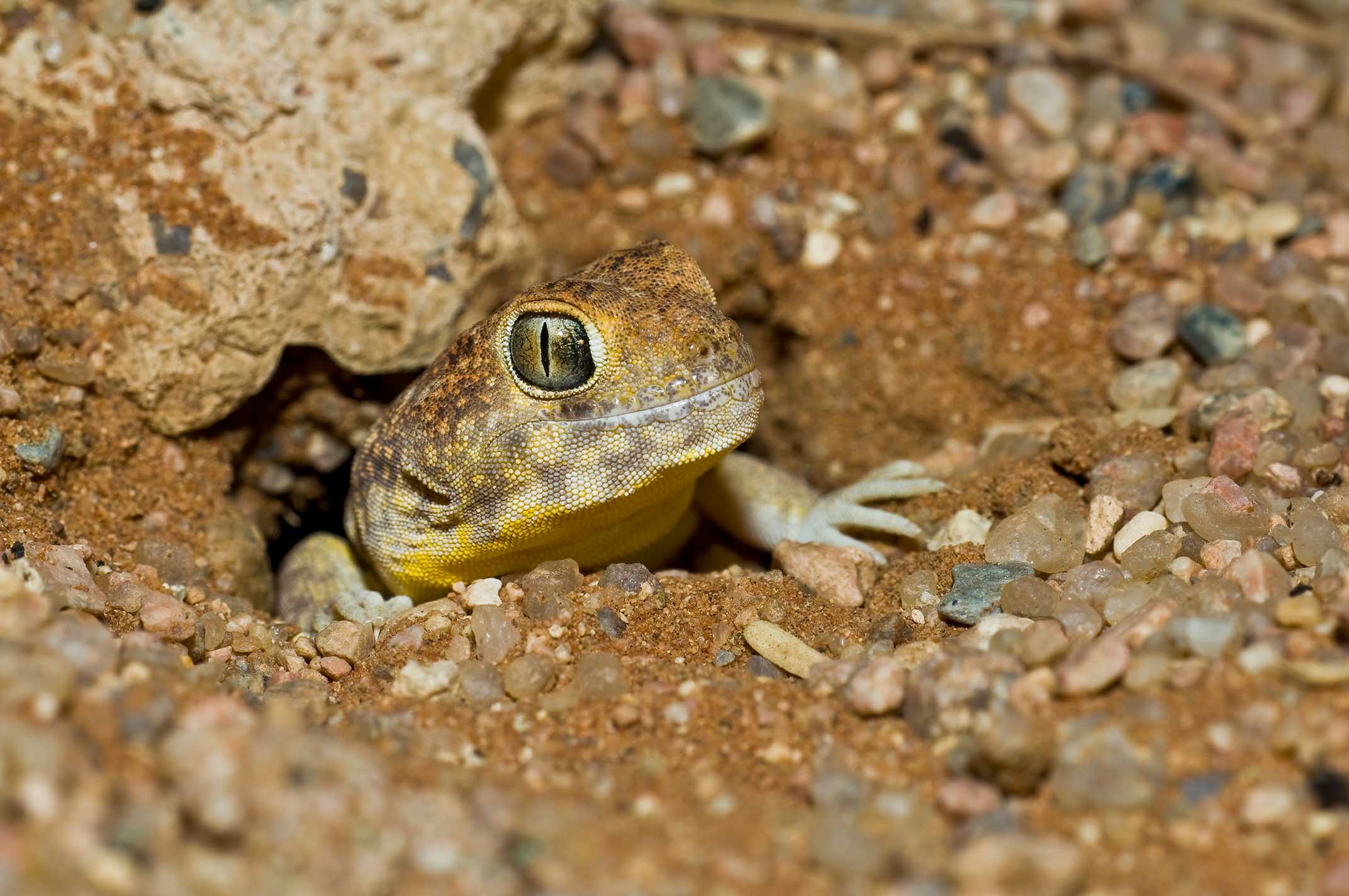
Common Barking Geckos,Ptenopus garrulus, builds extensive tunnel systems
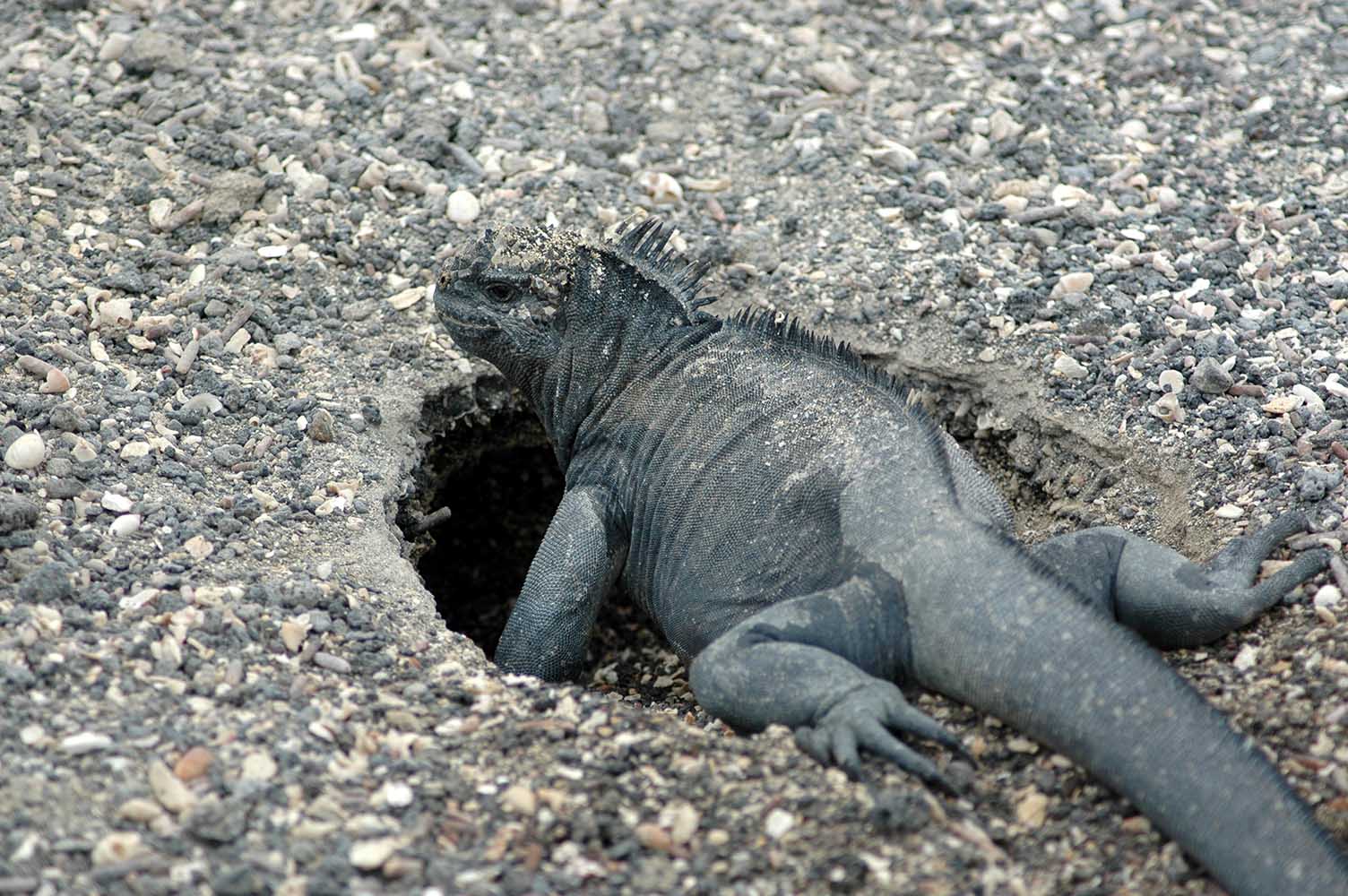
Female Marine Iguana, Amblyrhynchus cristatus, excavating a nest. Isla Fernandina Galapagos Islands, Ecuador
-

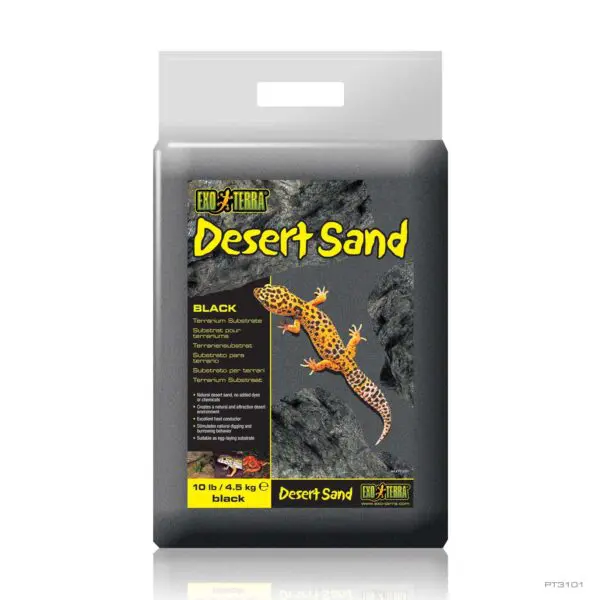
Desert Sand Black
-
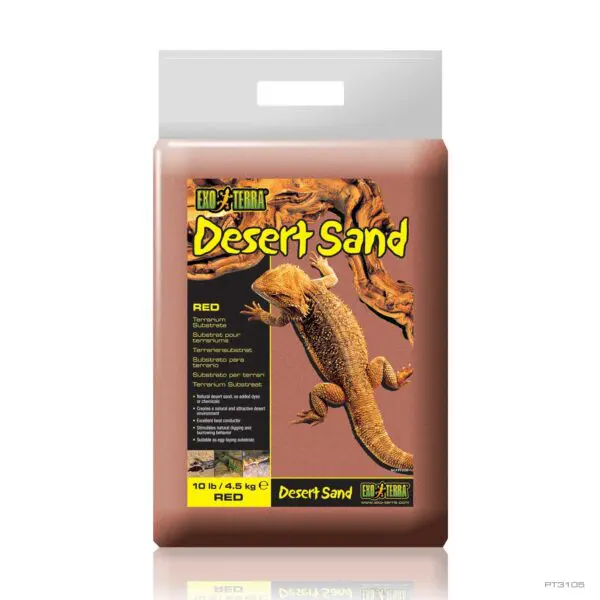
Desert Sand Red
-
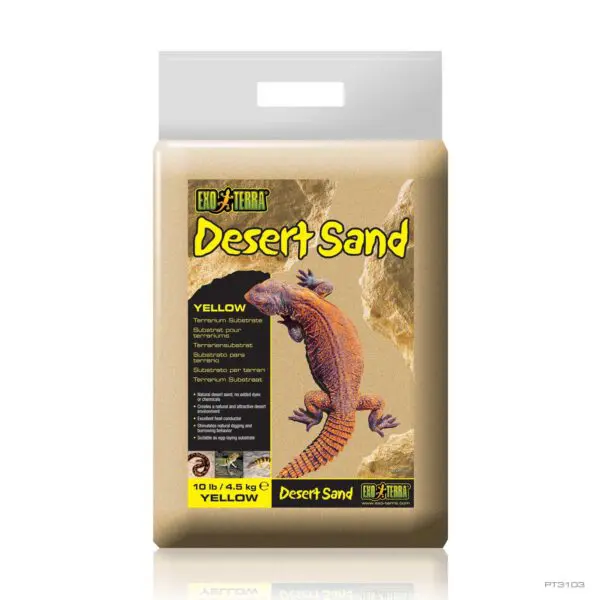
Desert Sand Yellow
-
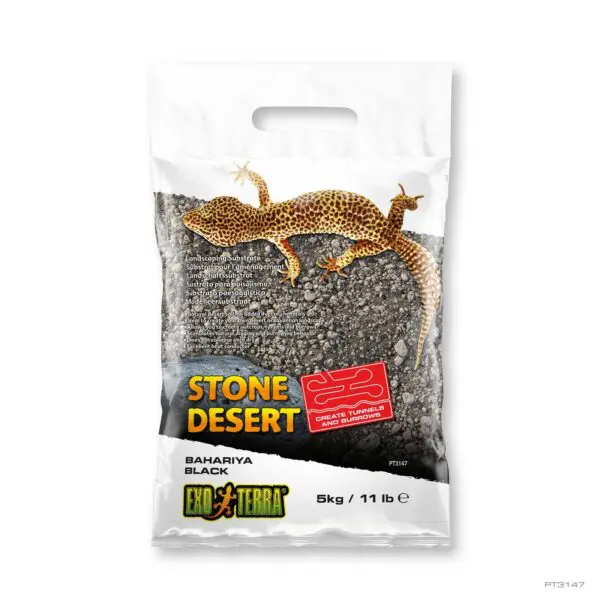
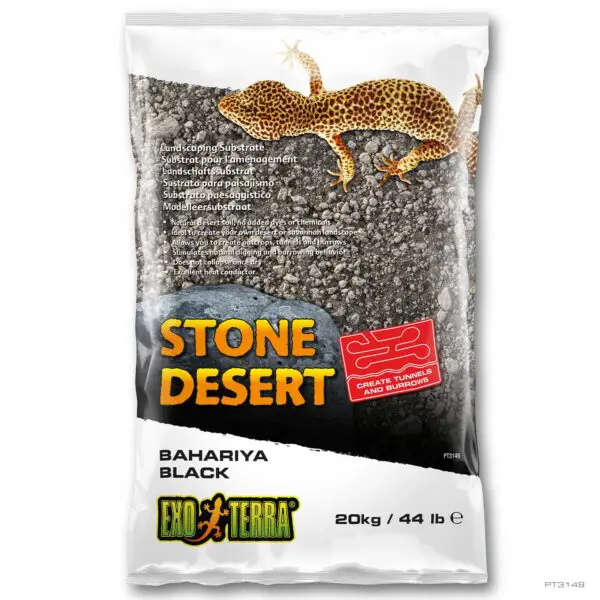
Stone Desert Bahariya Black 11 lb – 5 kg
-
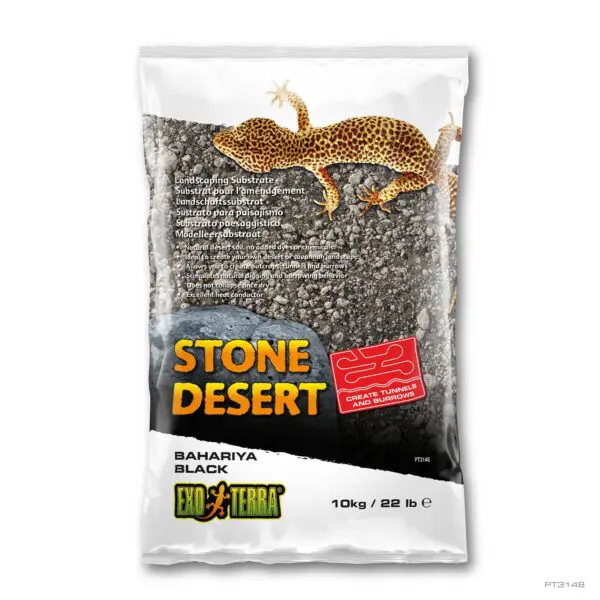
Stone Desert Bahariya Black 22 lb – 10 kg
-
Stone Desert Bahariya Black 44 lb – 20 kg
-
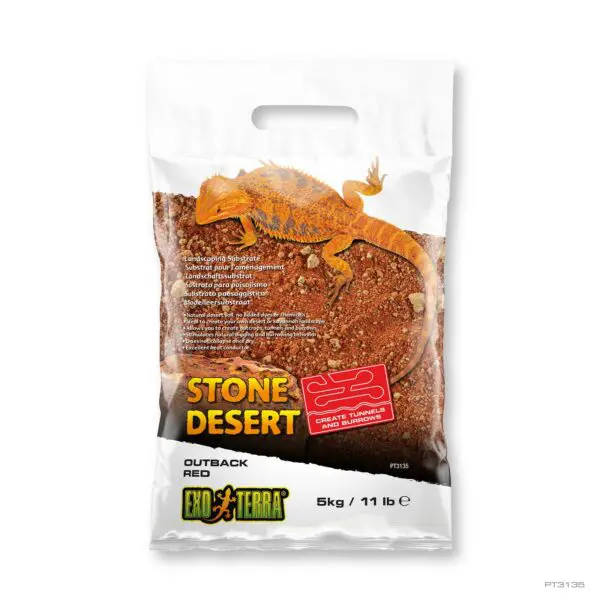
Stone Desert Outback Red 11 lb – 5 kg
-
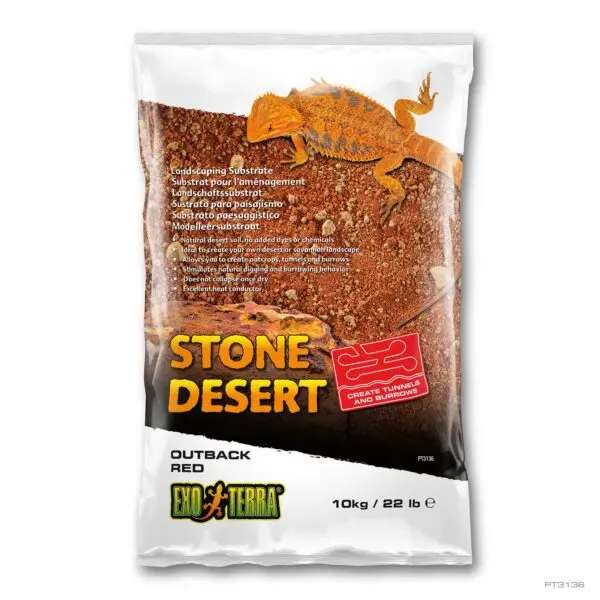
Stone Desert Outback Red 22 lb – 10 kg
-
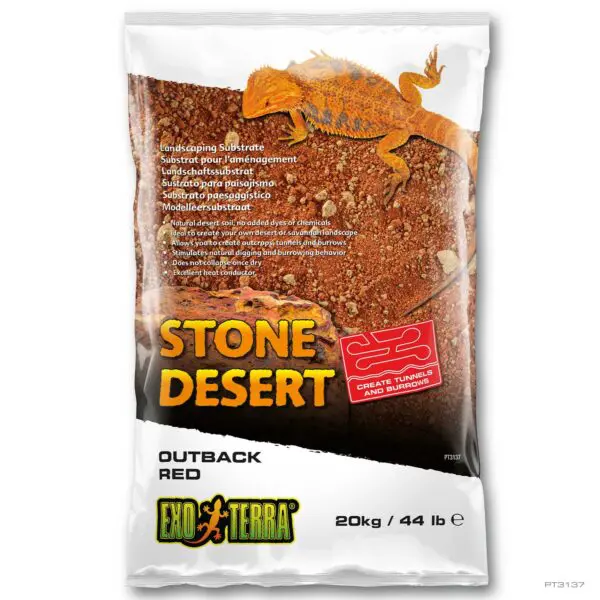
Stone Desert Outback Red 44 lb – 20 kg
-
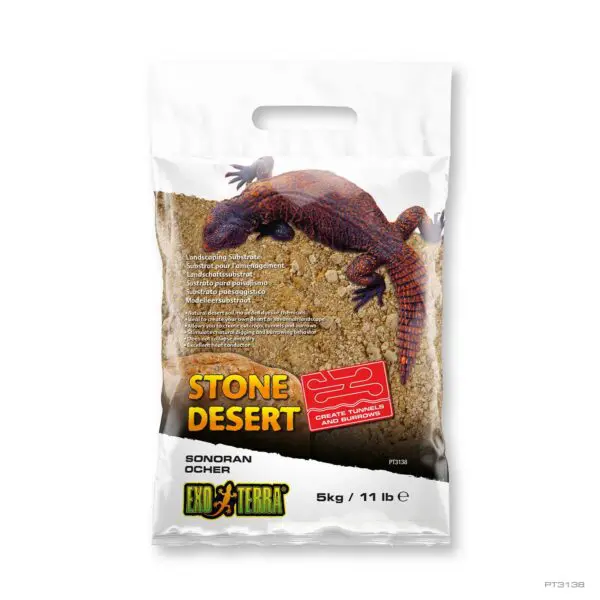
Stone Desert Sonoran Ocher 11 lb – 5 kg
-
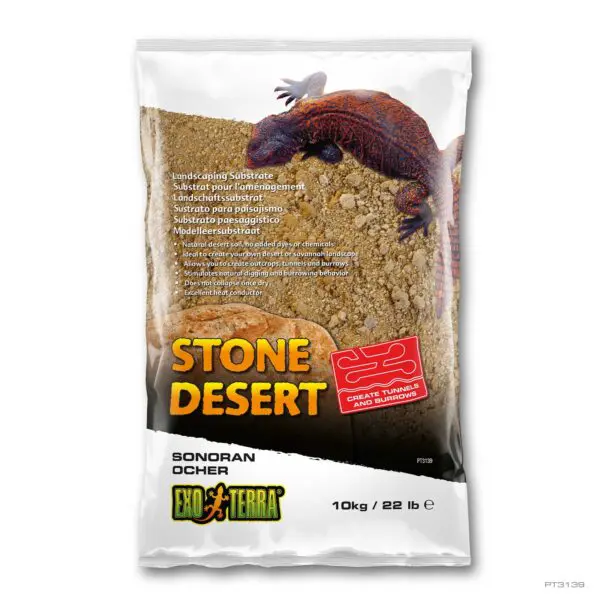
Stone Desert Sonoran Ocher 22 lb – 10 kg
-
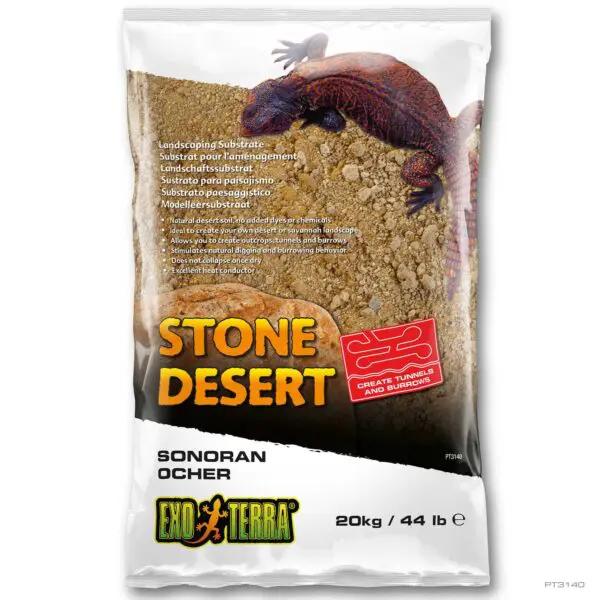
Stone Desert Sonoran Ocher 44 lb – 20 kg
Jesse Smets
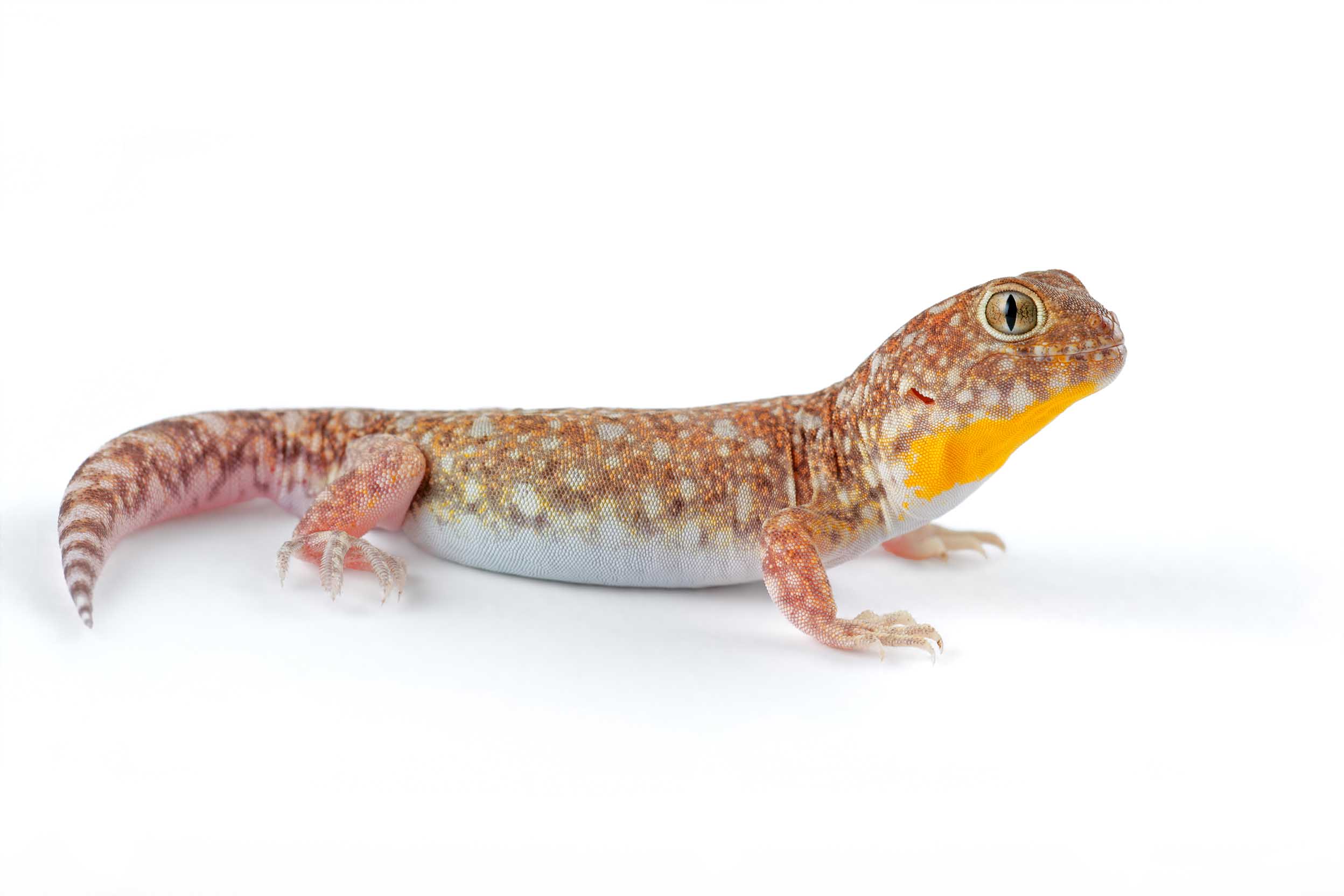
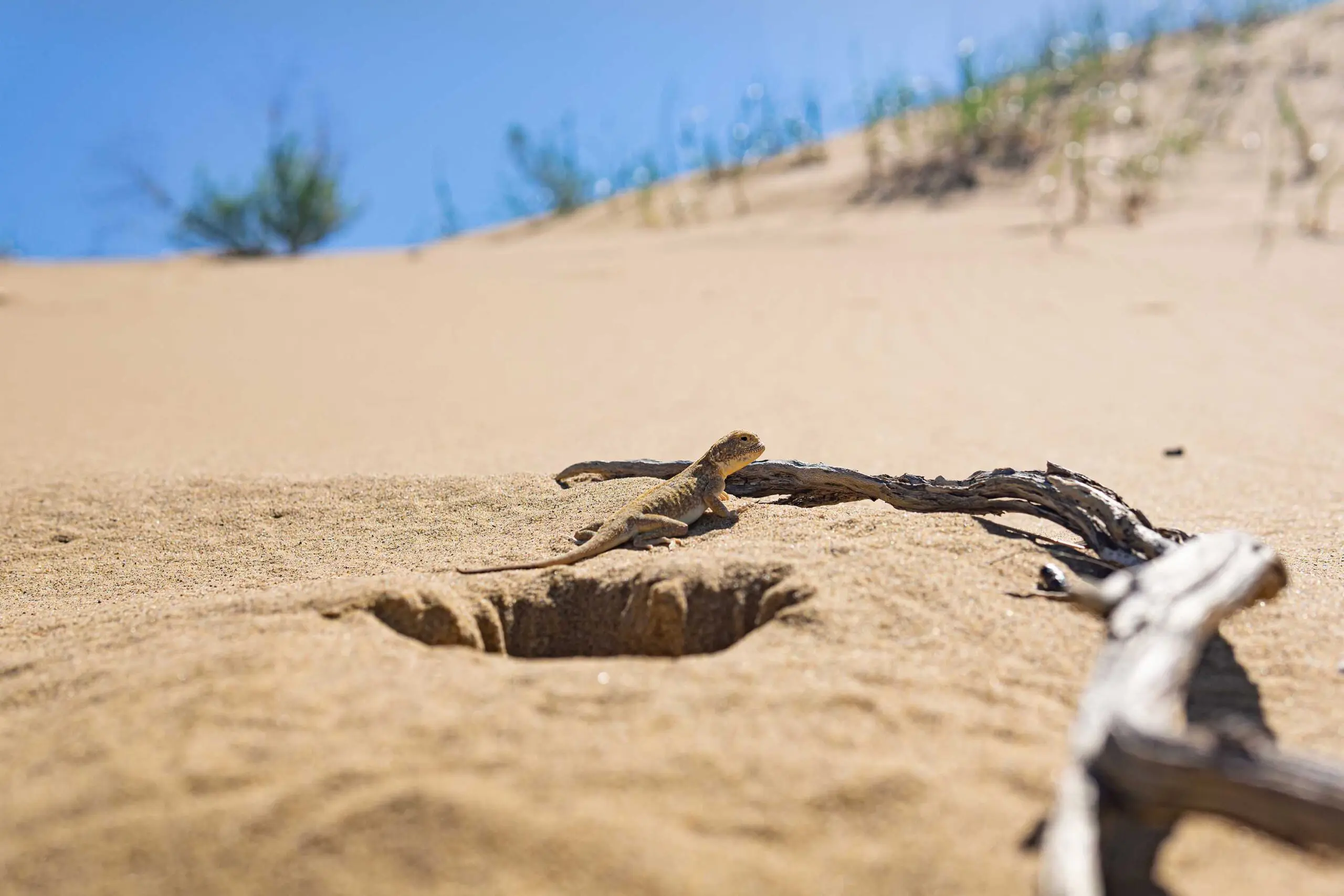
Secret Toad-Head Agama,Phrynocephalus mystaceus, near its burrow on the sary-kum Dunes, Dagestan, Russia
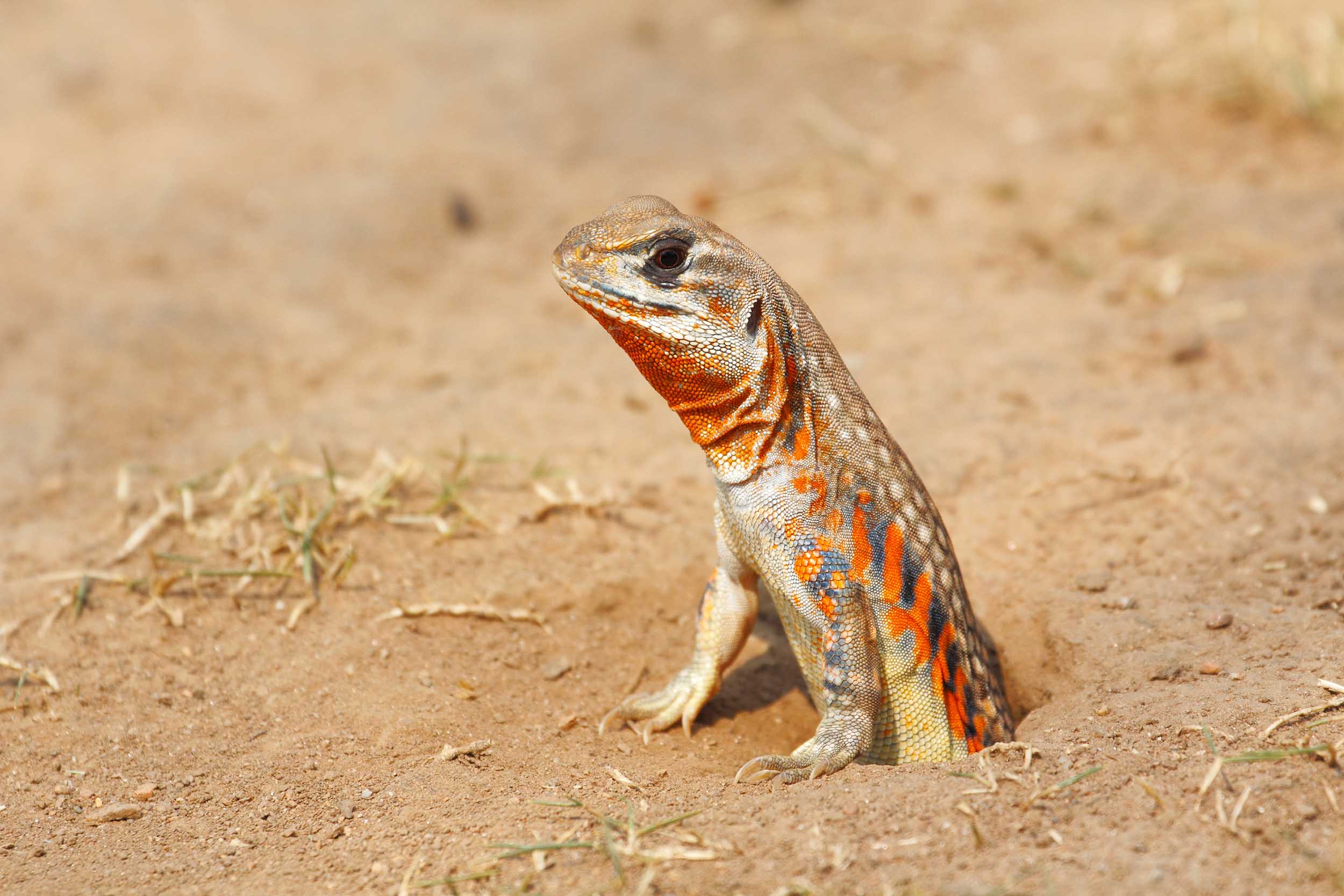
Butterfly Agama, Leiolepis belliana ocellata emerges from its burrow
Substrates Topics
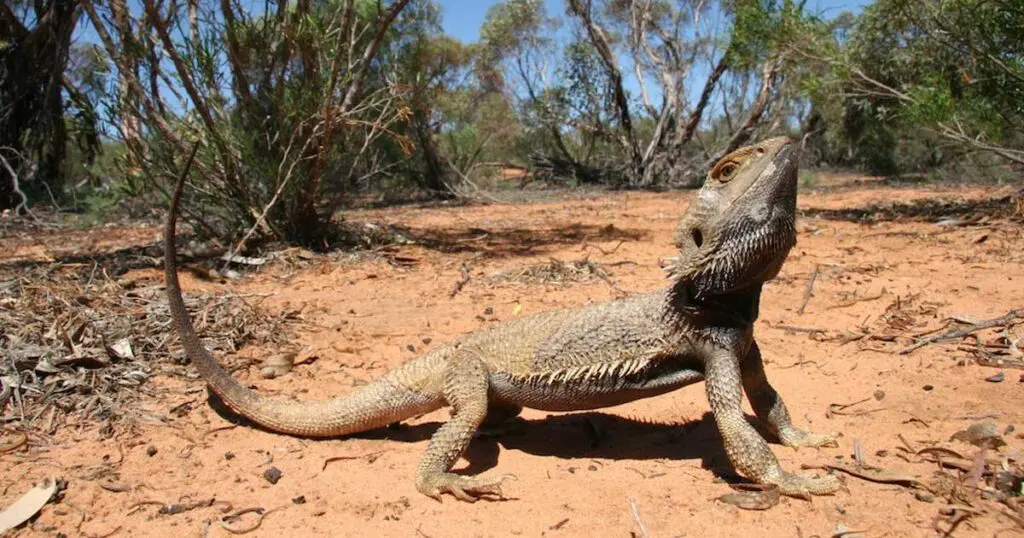
Impaction, a secondary condition
Gastrointestinal impaction in reptiles and amphibians is considered a secondary condition: it typically arises as a consequence of other underlying issues or conditions. The primary causes that lead to gastrointestinal impaction are usually related to the animal’s environment (for example temperature and humidity), diet, or overall health.
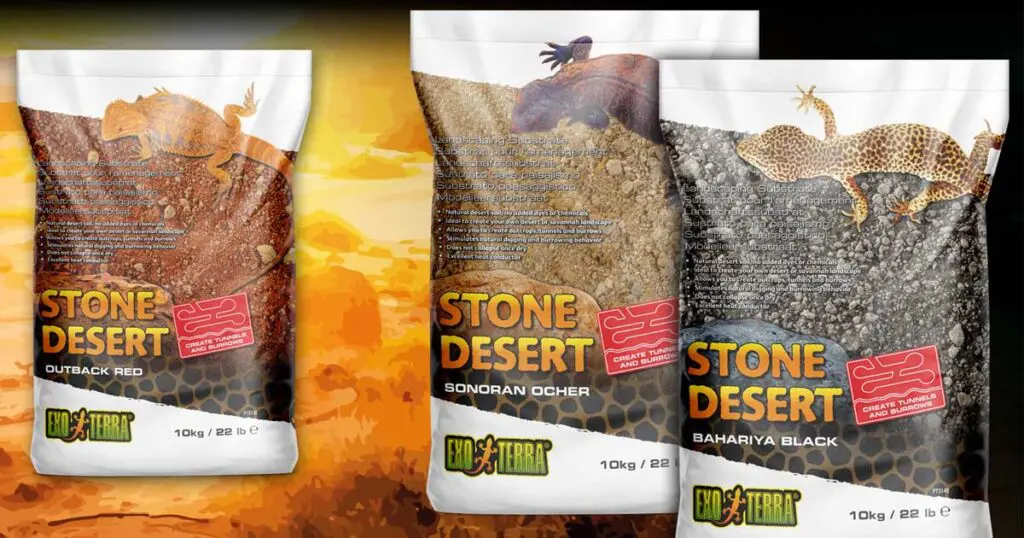
Stone Desert
The Exo Terra Stone Desert mimics the natural soil found in arid regions, like deserts or savannahs. Most desert soils are not purely sand-based but rather a combination of sand, decomposed granite and clay resulting in interesting and sometimes colorful rock formations. Exo Terra’s Stone Desert allows you to create your own desert or savannah landscape, including cool-humid burrows as well as warmer elevated basking areas.
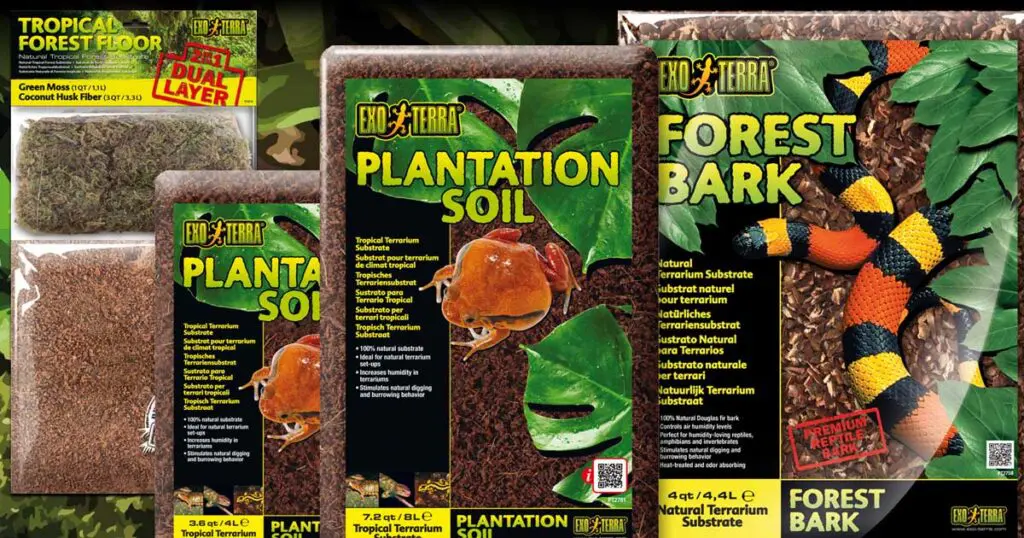
Why choose a natural substrate?
A natural substrate can harbor beneficial microorganisms that contribute to the breakdown of organic matter, recycling nutrients, and supporting a healthy ecosystem. These microorganisms create a balanced environment that mimics natural ecosystems. In a natural substrate, nitrifying bacteria can convert ammonia (produced from animal waste) into less harmful substances like nitrate. This helps maintain a healthier environment by reducing harmful ammonia levels. Some substrates can act as pH buffers, helping to maintain a stable and suitable pH level for the terrarium’s inhabitants. As a consequence, natural substrates are an essential component of any bioactive terrarium.
Stay up on all things exo terra.
"*" indicates required fields